
Buying a Kid's First Real Bike: Sizing, Timing and What to Skip
There is a moment when a kid outgrows the bike from the big-box store and wants to actually ride. Keeping up on the street, hitting a dirt trail, going somewhere on their own. That is the bike this post is about.
We have been selling kids their first real bike in Canoga Park since 1966, often to the children of people we sold to twenty years ago. Here is what we tell parents.
Kids bikes are sized by wheel, not by frame
Forget small, medium and large. Kids bikes go by wheel diameter: 12, 16, 20, 24, and then into adult sizes at 26 and 27.5.
As a rough guide, 16 inch suits four to six year olds, 20 inch suits six to eight, and 24 inch covers roughly eight to eleven. After that most kids are ready for a small adult frame. Height matters far more than age, so treat these as starting points, not rules.

The mistake almost every parent makes
Buying one size up so they grow into it. We understand the logic completely and it is still the wrong call.
A bike that is too big is harder to control, harder to stop and genuinely scarier to ride. A kid who feels out of control on a bike does not ride it. The bike sits in the garage for a year until it fits, and by then they have lost the habit.
Buy what fits now. Raise the saddle as they grow. Most kids get two seasons out of a size, and you will get a far better resale or hand-down out of a bike that actually got ridden.

What to check before you buy
Can they put both feet flat on the ground while seated? For a first pedal bike, yes. For a confident rider moving up a size, tiptoes are fine and give them room to grow.
Can they reach and squeeze the brake levers hard enough to stop? Small hands and adult-sized levers are a common and dangerous mismatch. Good kids bikes use short-reach levers, and cheap ones do not.
Can they lift it? A twenty-five pound bike under a fifty pound kid handles like a truck. Weight is the single biggest difference between a department store bike and a real one, and it is the thing kids notice first.

What to skip
Suspension forks on 16 and 20 inch bikes. They add several pounds, they rarely work at a child's weight, and the weight costs more than the suspension gains.
Anything with a full-size coil shock at these wheel sizes. Same reason. Marketing, not function.
Character-branded bikes. You are paying for the sticker and getting heavier steel and worse brakes underneath.
What is worth paying for
Lower weight, first and always. Hydraulic or good mechanical disc brakes, especially if there are hills where you live. Proper short-reach levers. And a frame from a company that makes adult bikes, because that is where the geometry knowledge comes from.
A Giant Talon 24 Disc at $650 is a real mountain bike with hydraulic discs, not a toy with a mountain bike shape. That is the category worth being in.
When they are ready to move up
The signs are obvious once you know them. Knees coming up toward the bars. Saddle already at maximum height. Reaching for the bars rather than sitting comfortably behind them. Or the simplest one: they have stopped wanting to ride and cannot say why.
Bring them in and we will measure rather than guess. It takes about five minutes.
Not every kid wants a mountain bike
If your family rides the LA River path and the neighborhood rather than dirt, a cruiser or a hybrid is a better fit and usually cheaper. Upright position, easy stops, comfortable for the kind of riding you will actually do together.
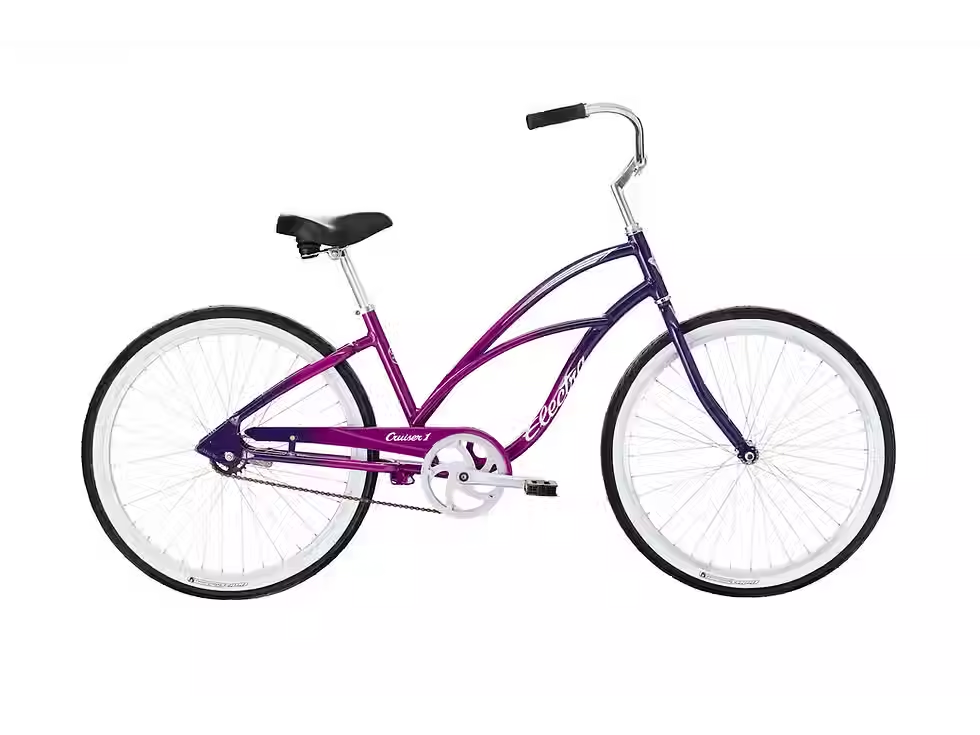
Match the bike to the riding you do as a family, not to the riding in the catalog photo.
Bring them in
We will size them properly, set the saddle and levers, and make sure they can stop the thing before it leaves the shop. Every bike is assembled and fitted here. Assembly runs $80 to $300 depending on the build.
Call to Reserve: (818) 818-6262. 8913 De Soto Ave, Canoga Park, open seven days.


Comments